
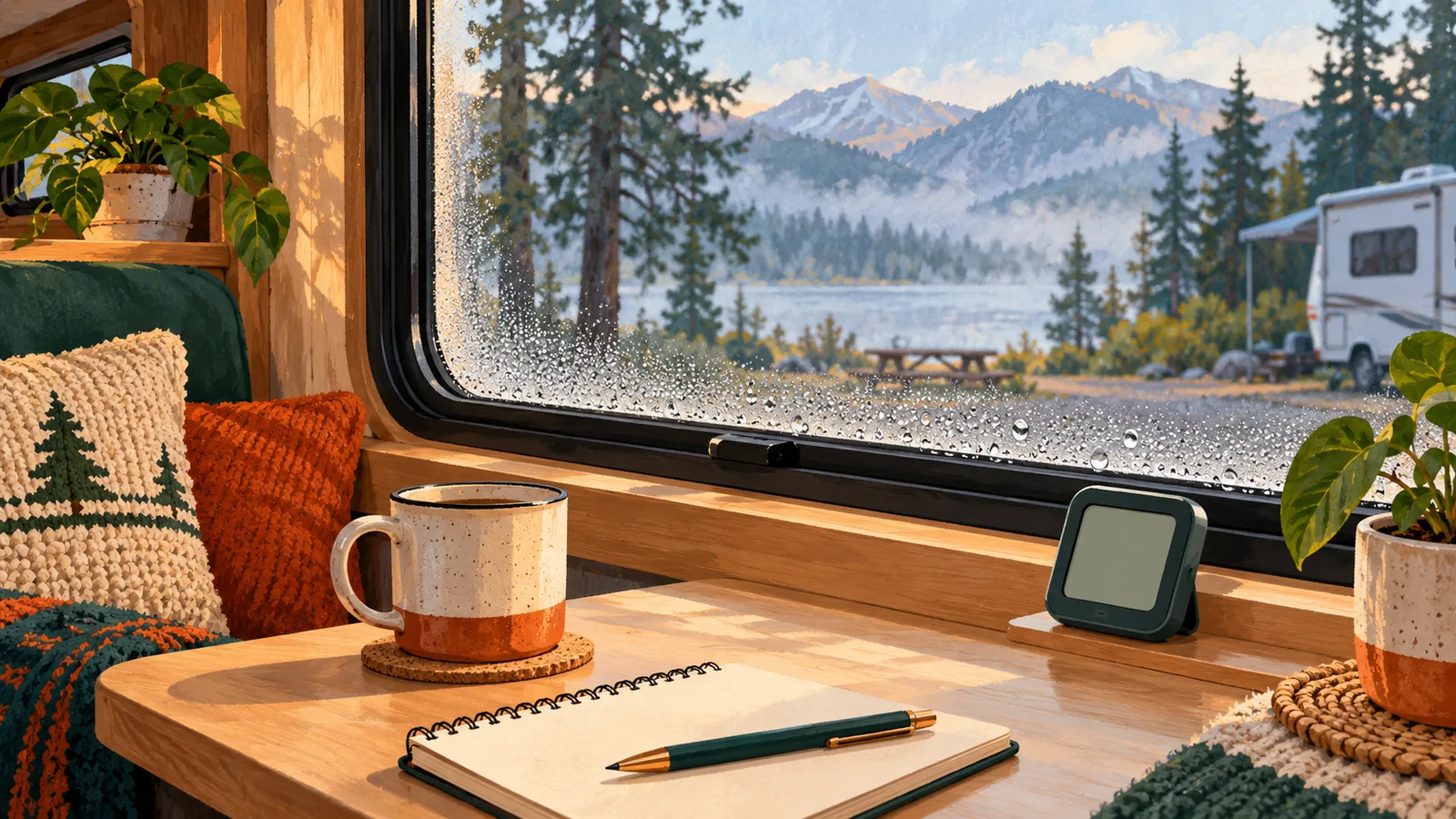
Start by writing down where moisture appears, when you notice it, and what was happening around it. A damp window, a wet cushion, and a stain below a cabinet can have different causes, even when they look like the same problem. A quick glance usually isn't enough to tell what's happening inside the RV.
Record moisture patterns while arranging help. Active leaks, electrical hazards, soft or deteriorating materials, contaminated water and suspected hidden damage need prompt professional attention. Don’t wait for the log to be complete.
Give every damp spot a specific address
“Wet by the bed” leaves too much room for interpretation. Write “lower inside corner of the curb-side bedroom window” or “floor directly below the bathroom cabinet.” Use the same location names each time so the record can be compared.
Sketch a simple floor plan and mark locations with letters. A phone photograph can show the broader area, followed by a closer view from the same angle. Include an ordinary reference object for scale if it can be placed without touching damage. Avoid climbing onto a roof or dismantling trim to get a better picture.
Keep observations separate from conclusions. “Water beads on the inside glass” is an observation. “The window seal has failed” is a diagnosis that may need inspection. The distinction helps a technician consider more than the explanation you first suspected.
Understand what a pattern can tell you
Condensation occurs when moist air meets a sufficiently cold surface. Finding moisture on interior glass after a cold night can make condensation a possibility. Water that repeatedly appears after rain may raise a different question. Neither pattern proves the source or rules out an additional problem.
Deal with water problems promptly and dry wet materials quickly. The EPA's moisture and mold guide recommends controlling moisture and notes that condensation can indicate high humidity. That is general residential guidance; it doesn't establish that an RV wall, floor, or other assembly is dry or undamaged.
An RV has layered walls, joints, roof penetrations, plumbing, and spaces that you cannot fully inspect from inside. A dry surface today does not establish that the underlying materials are dry. Use the pattern to ask better questions rather than to declare the problem solved.
Set up a manageable observation routine
Choose a morning check and an evening check while you are investigating. The checks should take only a few minutes and cover the same safely accessible locations. Add an entry when something changes, such as rainfall, a visible drip, or a newly wet item.
A simple indoor thermometer and humidity meter can add context. Put the device in a consistent, representative location according to its instructions. Record where it sits. Moving it between a steamy bathroom and a cool window makes readings harder to compare.
Do not turn the log into a hunt for a single perfect humidity number. Outdoor conditions, occupied space, ventilation, and the RV's design affect what you observe. Your exact RV manual may have condensation and ventilation guidance. Use the appropriate model and year from the manufacturer's manual library rather than copying a different owner's settings.
Record ordinary activities without assigning blame
Note showers, cooking, wet clothing brought indoors, and how many people were inside. Record whether ventilation equipment was used as its instructions allow. These details help show what was happening when the moisture appeared.
Also note outdoor rain, a sharp temperature change, and whether the RV had just moved. If a problem begins after travel, write down the timing without assuming movement caused it. A service professional may ask about recent maintenance or an earlier water event, so include those dates when known.
A family can share the observation work without giving children inspection tasks. A child can tell an adult that a blanket feels damp. An adult should handle electrical concerns, damaged materials, roof access, chemicals, and conversations with service providers.

Make only suitable, low-risk changes
Start with actions allowed by your manuals and the conditions: keeping wet personal items from sitting against vulnerable surfaces, using the intended ventilation during moisture-producing activities, and avoiding blocked air paths. If a portable appliance is considered, check its electrical requirements, placement instructions, drainage needs, and suitability for the RV first.
Change one ordinary habit at a time when possible and record the change. Otherwise, an improvement after several simultaneous changes tells you little about what helped. A note such as “used the bathroom exhaust as directed during both showers” is more informative than “tried everything.”
Do not seal over a stain, apply an arbitrary coating to a roof seam, mix cleaning products, or remove wall materials as an exploratory project. Those actions can conceal evidence, damage incompatible materials, or introduce hazards. Persistent moisture calls for a proper inspection and a repair method suited to the assembly.
Use a seven-day sheet without waiting seven days
Create one row per observation, with these fields:
- Date and time
- Location code from the sketch
- What you saw, smelled, or noticed without disturbing materials
- Photograph name or number
- Indoor temperature and humidity, if measured
- Outdoor weather and recent rainfall
- Recent activities and equipment use
- Any safe action taken and who recommended it
- Whether the area appeared changed at the next check
- Service contact and next step
Mark unknown fields “unknown.” Don’t reconstruct precise readings from memory; if yesterday’s only record is a photo, say so.
Highlight new or worsening conditions each day so another adult, the rental provider or a technician can find them quickly.
What a useful moisture note looks like
If you see droplets on the lower bedroom window on three cool mornings, note the window's condition and whether the surrounding wall has changed. If a damp patch then appears inside an overhead cabinet after rain, give it a separate entry. The two spots need their own timelines.
It would be tempting to call both condensation because the first pattern seems familiar. The log prevents that shortcut. You can tell the technician that the cabinet observation began after rain while the window observations happened earlier. The professional can decide what needs examination.
If the window looks dry after a ventilation change, keep the agreed follow-up and leave the issue in the record. Note the weather too: a warmer night could explain the difference. A dry window is encouraging, but you still need to find out what changed.
Know what to send for service
Send a compact packet: RV model and year, the location sketch, a few dated photographs, the first occurrence, recurrence pattern, recent relevant work, and your current concern. Ask what steps are appropriate before the appointment and whether the RV can remain occupied.
If you rent, report the issue promptly through the rental company's process. Avoid authorizing repairs or applying products without its approval. If you own, ask about diagnostic scope, access requirements, warranty procedures, and whether belongings need to be moved before arrival.
Tell the service provider about musty odors, recurring wetness, visible deterioration, or a history of water intrusion even if the area looks better today. Avoid minimizing the issue because the symptom disappeared before the appointment.
Finish with a follow-up record
After professional work, record the stated cause, completed work, materials or parts identified on the invoice, and the recommended recheck. Ask what would count as recurrence and who to contact if it happens.
Keep comparing the same locations under relevant conditions without deliberately spraying or flooding the RV to test it yourself. If the professional recommends a specific inspection or controlled test, follow that guidance and use qualified help where required.
Use the log to describe the problem clearly, track the work and confirm the result with your service provider. Keep recording useful changes without letting the notebook delay a repair.
Researched practical guide · The RV Dummies · Editorial review: 2026-10-02.
Sources & further reading
Always follow your RV and tow-vehicle manuals. When in doubt, ask a pro.