
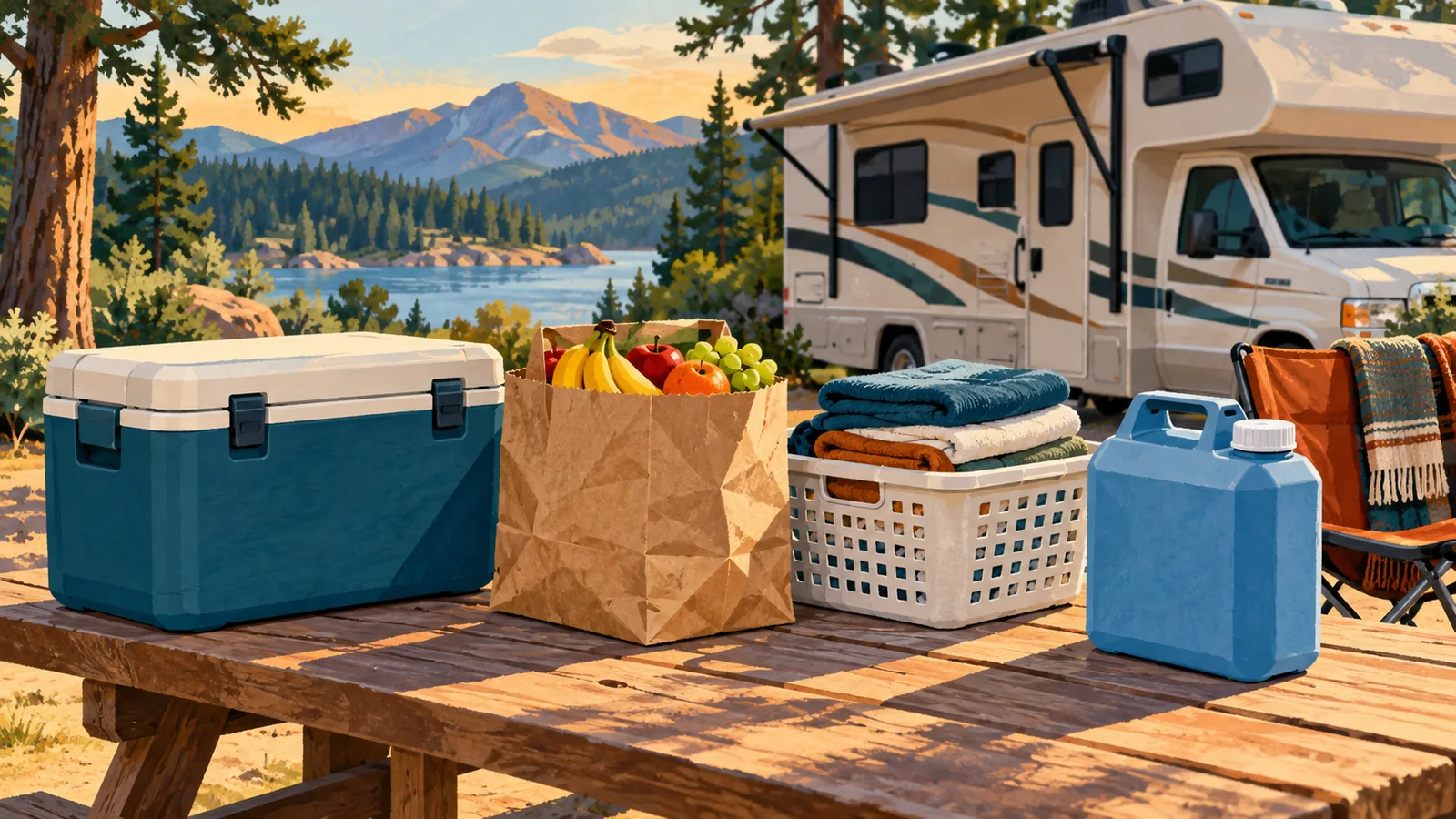
A good resupply day leaves the household ready for the next few days without sending a long RV into four unsuitable parking lots. Start with what is running low, identify the services you actually need, and group the stops around access, opening hours, food handling, and the family's energy.
Allow time for laundry, grocery storage and water or wastewater service. For a family of five, even simple errands can fill much of a day.
Before setting the errand route, verify every service directly. Follow your RV's instructions for water, waste, loading, and equipment operation as you plan each stop.
Take inventory before choosing stores
Check the essentials first: drinking water, normal meal ingredients, clean clothing, required household supplies, and anything your family needs on a fixed schedule. Note tank status using your equipment's guidance and the limits of its indicators.
Buy what you need and can safely store within the RV’s payload limits. A bulk package saves nothing if it won’t fit or spoils before you use it.
Look through the refrigerator and pantry before planning meals. A resupply trip can be smaller and faster when it uses what is already aboard. Keep the list visible to both adults so an item is not bought twice because two people noticed it independently.
Decide whether the RV needs to move
If you are settled at a campsite and have a separate vehicle, consider which errands can be done without moving the RV. Laundry and groceries may be easier in a passenger vehicle, while a dump or refill need could require a different arrangement.
Compare a combined outing with the time needed to break camp, drive the rig through town and set up again.
If the RV does need to move, plan each access point as you would on a travel day. Check entrances, turning room, parking, and exits. A store's large building does not guarantee a suitable lot for your configuration.
Verify services that can disappear from a listing
Call or check the official source for the laundry, water fill, dump station, and any other essential facility. Ask about current operation, hours, fees, access restrictions, and whether non-guests may use the service.
For water, confirm that the source is potable and intended for your use. A hose beside a dump station may be for rinsing wastewater equipment. Do not use it to fill the fresh-water system simply because it is convenient.
Do not assume rest areas provide RV services. Florida's Department of Transportation states that its rest areas have neither RV hookups nor dump stations. A rest stop may still be useful for a break, but it should not appear in your plan as a verified wastewater service. FDOT rest-area information
Order the day around the least flexible stop
Identify the service with the narrowest window or the biggest consequence if missed. A dump facility that closes early may need priority over a grocery store open into the evening. A scheduled pickup may determine the route more than the geographically nearest stop.
Then consider the condition of the supplies. Purchase refrigerated and frozen groceries near the end of the shopping sequence unless you have a suitable, verified cold-storage arrangement for the entire trip. Keep food handling separate from wastewater tasks and equipment.
Leave a margin between stops. A line at the dump station or occupied washing machines can change the timing, especially with the whole family along.
Make laundry fit the household
Sort laundry before leaving if that is practical, and check what the facility provides. Bring the payment method and supplies it accepts. Confirm machine availability and any rules about oversized items or specific loads.
Use the waiting period deliberately, but do not plan to be in two places at once if the laundry needs supervision. One adult might manage the machines while another handles a nearby task, provided the family and transportation arrangements work.
Keep clean laundry separate from shoes, wastewater supplies, and other dirty gear on the return trip. Give it a temporary storage place so it does not become a pile across the beds just as everyone needs to settle down.
For children, a small familiar activity and a clear expectation about the waiting time may help the outing run more smoothly. Avoid promising a very quick stop when multiple wash and dry cycles are involved.
Protect the grocery purchase on the way home
Use appropriate cold storage and monitor temperature rather than relying on how a cooler feels. USDA's camping food-safety guidance calls for keeping perishable food at or below 40°F and limits time without refrigeration; when surrounding air is above 90°F, the limit is one hour rather than two. Follow the full guidance for the food and conditions involved. USDA food safety while camping
Plan refrigerator space before the store visit. A bargain is not useful if it cannot be stored safely. Keep raw foods appropriately separated and use containers suited to travel.
If the cold-storage plan fails or you are unsure how long food was outside safe conditions, use official food-safety guidance rather than a smell test. Build the errand order to prevent the problem instead of hoping the last stop will be short.
Treat water and waste as focused jobs
Use the dedicated clean-water and wastewater equipment for their intended purposes, following the manuals and facility rules. Keep the tasks organized, identify connections before use, and complete the appropriate hygiene routine afterward.
Do not turn a busy queue into a reason to rush or guess. If a fitting, valve, or facility instruction is unclear, stop and ask for suitable help. The person waiting behind you does not change the correct operating procedure.
Plan the loaded condition after refilling. Water and newly purchased supplies contribute to the rig's load, so they need to fit the verified ratings and loading plan. A resupply day can change the travel configuration more than expected.
Have a failed-stop alternative
Choose an alternate for any essential service that would prevent the next part of the trip if unavailable. The alternative must be more than another pin in the same app. Check its hours, access, and availability too.
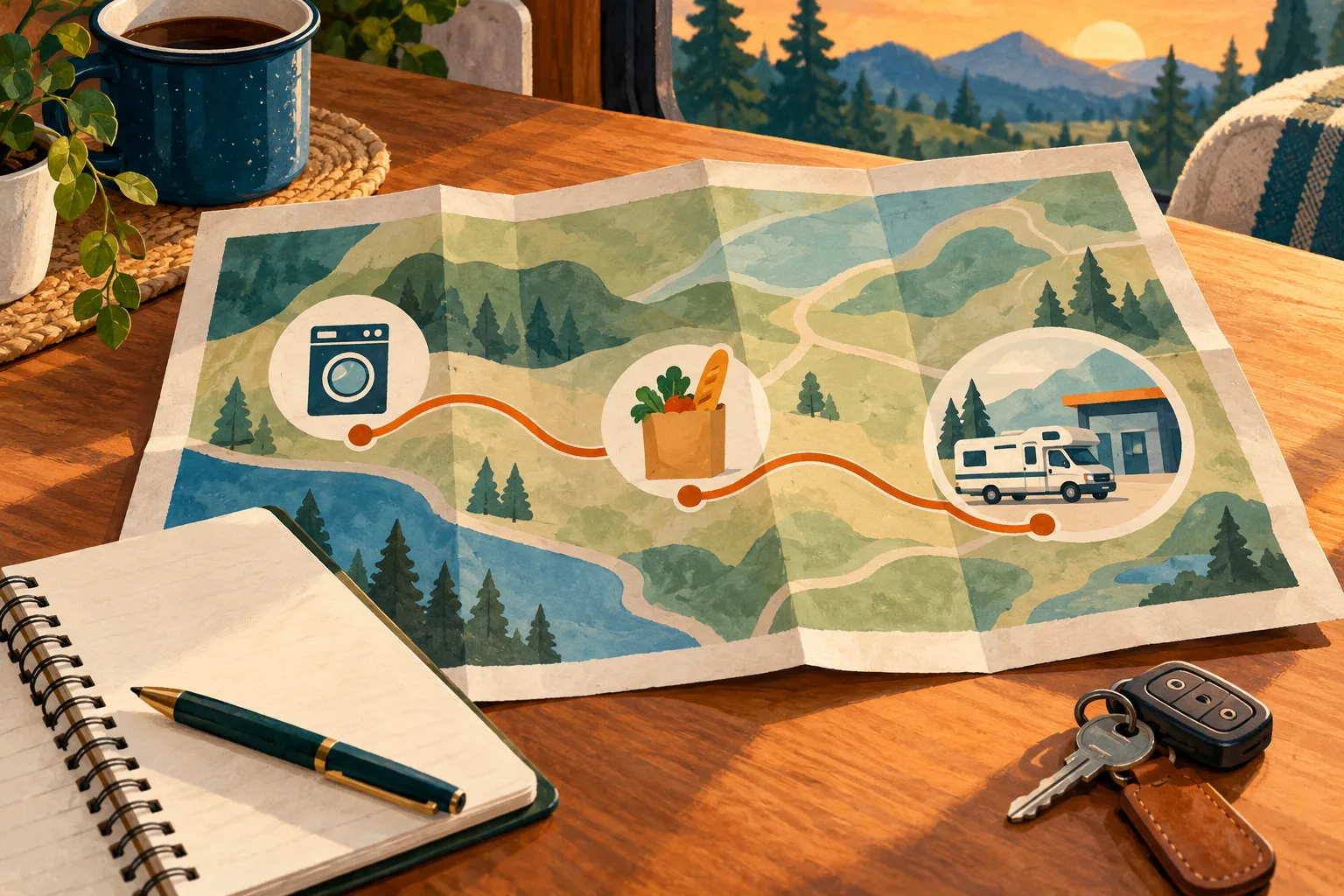
For example, you might start with laundry, reach the dump station before its afternoon closing, then pick up groceries on the way back to camp. If the dump station is closed, use the alternative you checked earlier and skip the optional shopping. Get the tank situation sorted before heading to a remote campsite.
Keep the next overnight flexible enough for that kind of change. Sometimes the best response to a failed essential stop is an additional night at a suitable campground.
Keep one shared errand list
Agree who will handle the route, service questions, purchases and family supervision. Check off completed errands on one shared list to avoid missed or duplicate purchases.
Give each child an age-appropriate role, such as checking the snack list or helping sort clean clothes. Keep vehicle maneuvering and water or wastewater equipment with a competent adult.
Plan food and breaks for the errand day itself. A household can finish buying a week's groceries while still having no easy lunch available. A simple meal plan reduces the temptation to squeeze one more stop into an already long afternoon.
Finish with a reset at camp
Put away food promptly, store equipment in the correct places, and update the supply list. Record which services worked well for your rig, including the date and any restrictions. Future you will appreciate a note that explains the actual entrance rather than only the business name.
Your resupply card can include the minimum-stock list, essential services, verified hours, access notes, route order, cold-storage plan, family roles, and alternatives. Keep it short enough to use during the day.
Prioritize essential services and allow for delays so the family is ready for the next part of the trip.
Researched practical guide · The RV Dummies · Editorial review: 2026-10-02.
Sources & further reading
Always follow your RV and tow-vehicle manuals. When in doubt, ask a pro.