

Try your first night without hookups somewhere nearby where camping is permitted and you can leave easily. Use your existing equipment within its instructions and record how the evening and morning go.
People use “boondocking” in different ways. Here, the first test means spending a night without campsite utility hookups. That can happen in a suitable developed campground or another place where overnight RV camping is explicitly permitted. It does not have to begin down a remote dirt road.
Watch water, power, waste and comfort needs while help and alternatives are close.
Choose an easy place to change your mind
For the first test, prioritize dependable access, a known legal stay, and reasonable proximity to services. A dry site in a familiar campground can be ideal. It removes uncertainty about finding a campsite while still allowing you to learn how the RV behaves without hookups.
A driveway rehearsal can also help if you have permission, local rules allow it, and the setup is suitable. Do not assume that owning a property or receiving a friend's invitation overrides local restrictions. The useful feature is reversibility: you can end the test without a long or difficult drive.
Avoid combining several firsts. Remote access, severe temperatures, unfamiliar equipment, and no cell service create a different task from a simple overnight trial. Save those challenges for a later trip after you understand the basics.
Verify permission for the exact place
If you choose public land, identify the managing agency and check its current local rules. A map pin, an old review, or tire tracks do not establish permission to camp.
Check access, stay limits, permits, and current fire rules with the relevant BLM office or official site before choosing a spot. BLM manages both developed campgrounds and dispersed camping areas, and its guidance says restrictions vary by location. A commonly repeated stay limit isn't a nationwide permission slip. BLM camping guidance
Confirm that the route is open to your vehicle and that the site can be reached without damaging vegetation or creating new tracks. If an access road looks questionable, stop before committing the rig to it and obtain reliable information. The first test should not depend on proving that your RV can get through.
Define what you want to learn
Write three or four questions before the trip. For example: Can we complete an ordinary evening and morning with our current water supply? Which outlets or appliances work with our installed power system? Can everybody sleep comfortably in the forecast conditions? How quickly do the holding tanks appear to fill?
These questions keep the test focused. You are not trying to use every appliance simultaneously or drain the battery to discover its absolute limit. Work within the operating limits and guidance supplied with your RV, battery, inverter, appliances, and other equipment.
Choose a normal family routine. A test in which nobody washes dishes or uses the bathroom may be easy to complete, but it tells you little about the trip you actually want to take.
Record the starting condition
Before disconnecting from available services, record what you can reliably observe: fresh-water status, waste-tank status, battery information, available fuel where relevant, forecast conditions, and the systems you intend to use.
Follow the monitor’s instructions and record the reading as shown. Mark uncertain amounts as estimates instead of treating each percentage as an exact quantity remaining.
Keep the loaded-weight implications of water and equipment in mind. Your test supplies must fit the vehicle's ratings and safe loading plan. Do not add extra water, batteries, or a generator merely because there is room in a compartment.

Learn the power arrangement before the test
Identify which devices operate from the RV's existing systems and which require another power source. An installed inverter, if present, may serve only certain outlets or have limits that matter to your appliances. Read the documentation and ask the manufacturer or a qualified technician if the configuration is unclear.
Write an essential-use list: lighting, required refrigeration, communications, and any other needs that are important for your household. If someone relies on powered medical equipment, obtain an appropriate power and backup plan from the equipment provider or clinician before attempting an overnight without dependable hookups.
Do not assume a solar panel, portable power station, or generator will solve an undefined need. First determine the load, the operating time, the equipment's capabilities, and the safe charging arrangement. A test should reveal useful information without pushing any device beyond its limits.
Keep generator safety separate from convenience
If you use a portable generator, follow its instructions and the site's rules. Never operate it inside an RV, storage compartment, tent, or another enclosed space. Keep exhaust well away from doors, windows, and vents, including those of neighboring campers. CPSC warns that generator carbon monoxide can kill quickly and that portable generators belong outdoors away from openings. CPSC generator safety
A factory-installed generator has its own installation, maintenance, and operating requirements. Do not treat portable-generator advice as a substitute for those instructions. Maintain and test the RV's alarms as directed by their manufacturers, and act immediately on an alarm rather than dismissing it as an inconvenience.
Check permitted operating hours before choosing a plan that depends on generation overnight. If your essential needs cannot be met within the site's rules and safe equipment operation, choose hookups or another arrangement.
Track normal water and waste use
Use drinking water from a verified potable source and follow the RV's water-system instructions. Record how the family uses it during the evening and morning. Dishes, handwashing, toilet use, and showers may contribute differently from what you expected.
You can make practical changes without turning the stay into a conservation contest. Prepare a simple meal, organize dishwashing, and avoid leaving taps running unnecessarily. Keep normal hygiene intact.
Have a lawful plan for wastewater and trash before you arrive. Do not empty gray water onto the ground or assume a remote site makes disposal acceptable. Use approved facilities and follow the local rules. Record where you will refill and dispose of waste after the test so the return trip is part of the plan.
Set clear reasons to end early
Agree in advance that the family will leave or restore appropriate services if essential equipment stops working, safe temperature control is unavailable, weather or road conditions become unsuitable, or someone is uncomfortable in a way the plan cannot resolve.
Ending the test early can reveal an unexpected power load or an inadequate weather plan. Use that finding to prepare for the next trip.
Keep the alternate destination and route ready. Check that the alternative is actually available rather than assuming a nearby campground will have a vacant site whenever you arrive.
Review the morning with useful numbers and observations
Record the ending readings, what appliances were used, the weather, and anything that changed the routine. Distinguish measured amounts from estimates. If a tank indicator moved unexpectedly, note that rather than claiming a precise consumption rate.
Ask each family member one practical question: what would make the next overnight easier? The answer may be an earlier dinner, a better reading light, or a shorter distance from a familiar campground. It may not require a purchase.
Then choose the next test. Repeat the same setup if important questions remain. Extend the duration only when the supply, power, waste, weather, and exit plans justify it. Your first overnight gives you a baseline, not a guarantee that a week in different conditions will work the same way.
Related family video
We Got Stranded in the Desert while RV Boondocking!
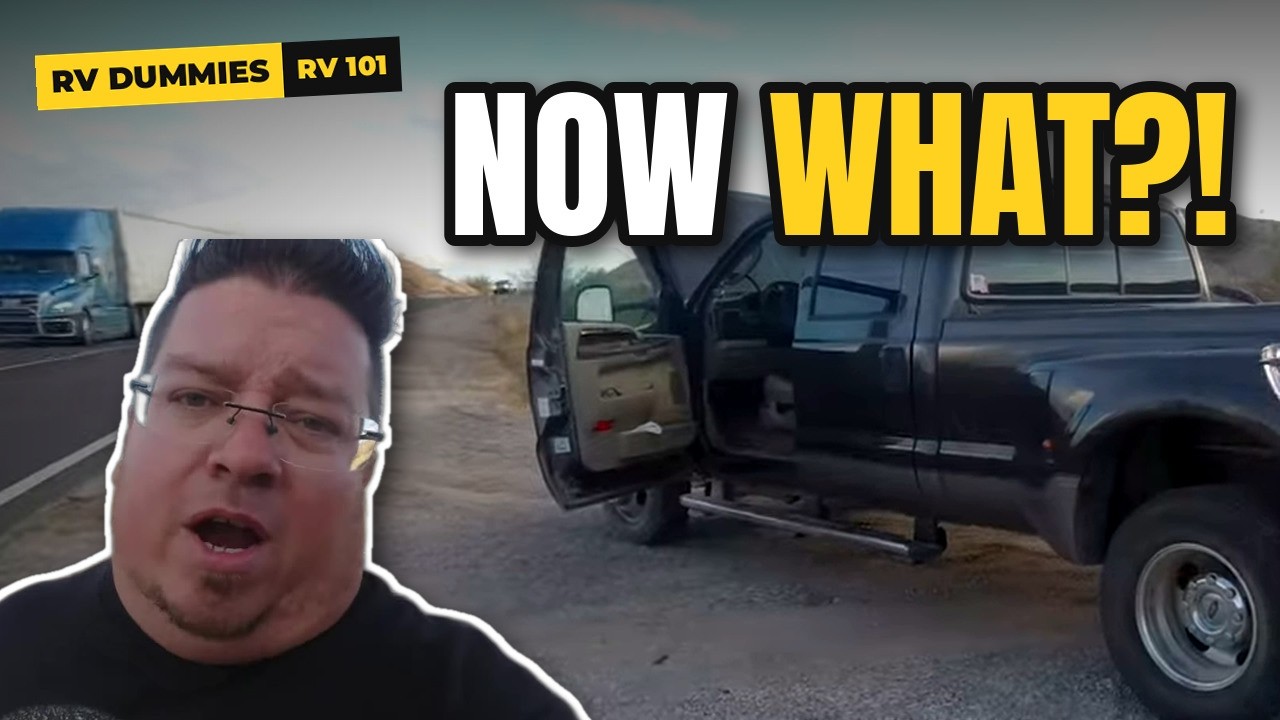
From the RV Dummies archive · 2021-02-07. The video’s technical instructions have not been reviewed for this guide. Check current rules and your equipment instructions. Watch on YouTube.
Researched practical guide · The RV Dummies · Editorial review: 2026-10-02.
Sources & further reading
Always follow your RV and tow-vehicle manuals. When in doubt, ask a pro.