
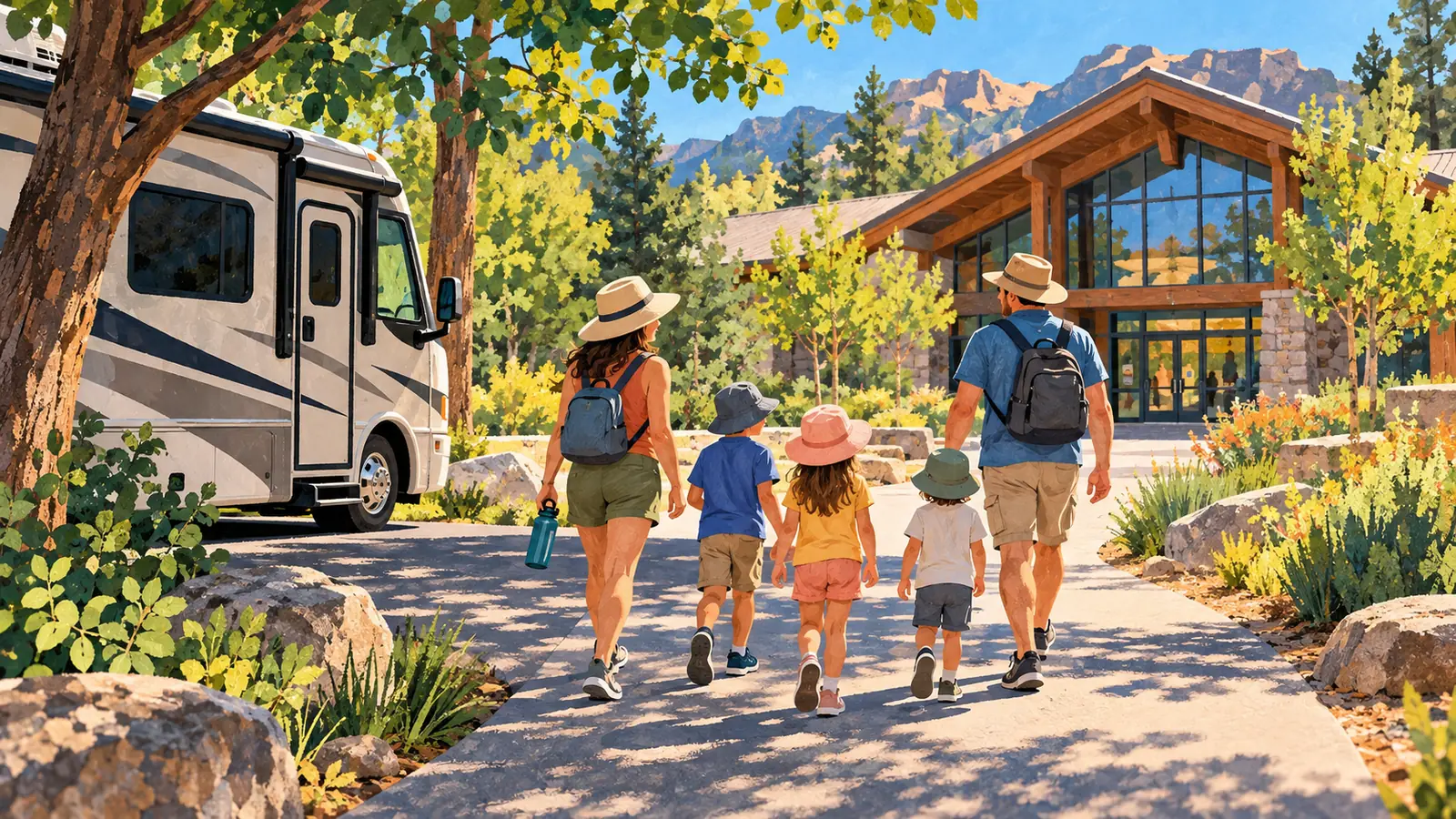
Before the air conditioner fails, decide where everyone will go if the RV becomes too hot. Verify the destination, transport, opening hours and arrangements for pets while you have time to plan.
Keep essentials ready and choose a cooling destination you can use even if you don’t know how long repairs will take.
Check the forecast for the place you will occupy
Look at the forecast for the campground and the planned travel period, not just the nearest large city's daily high. Read local National Weather Service alerts and their timing. Heat can remain a concern after the afternoon peak, particularly when the RV has not cooled down.
The National Weather Service explains heat alerts and why local conditions affect them. Treat those alerts as planning information rather than a universal thermometer setting that divides safe from unsafe. People differ in their ability to tolerate heat, and the conditions inside an RV can differ from the forecast outdoors.
Before a hot stretch, ask each adult what fixed obligations can move. A flexible sightseeing plan can be shortened more easily than a work shift or a long departure routine. Make those choices while there is time to change reservations or arrange care.
Choose two destinations with different failure points
Your first destination might be a nearby indoor public facility, a confirmed day-use location, or suitable lodging. Verify hours, admission conditions, accessibility, and whether your entire group can enter. An air-conditioned building visible on a map may be closed, restricted, or unavailable during an outage.
Choose a second option that does not depend on the same assumption. If the first location closes at five, the backup must cover the evening. If the first is in the campground, consider what happens if the whole property loses power. If lodging is the fallback, check current availability rather than treating a saved listing as a reservation.
Write down both addresses and routes, including the time needed to gather everyone, reach the vehicle, travel and go inside at the destination. Allow for the whole move, and leave early enough to do it calmly. The journey time cannot tell you how long anyone can safely remain in the heat.
Give the family a clear departure trigger
Agree that cooling failure, worsening indoor conditions, an official direction, or concern about a person's wellbeing can trigger relocation. Do not require everyone to agree that the RV is unbearable. One adult should be able to say the fallback is needed without starting a debate about whether the repair person is almost there.
Individual medical questions belong with a healthcare professional. Ask in advance if someone has a condition, medication, or care requirement that changes their heat plan. Do not rely on a generic online threshold for that person.
If someone is confused, collapses, loses consciousness, or may have heat stroke, call emergency services immediately. The National Weather Service's heat-illness guidance treats heat stroke as a medical emergency. Follow emergency-dispatch instructions rather than driving around looking for a more comfortable campsite or waiting for the RV to cool.
Divide responsibilities before the stressful moment
With two adults, one can gather children and pets while the other takes essential items and contacts the destination. Agree who has the keys and who counts everyone at departure and arrival. If you are the only adult, keep the list shorter so supervision is never traded for extra packing.
Give children a simple job appropriate to their age, such as bringing their shoes and a small comfort item. They should not manage electrical equipment, decide whether a pet is safe, or be responsible for younger siblings during an urgent move.
Keep the departure plan visible to both adults. A backup that exists only in one person's phone can fail when that phone is flat or the person is speaking with campground staff. An offline note or small paper card is enough.
Pack an essentials bag that supports relocation
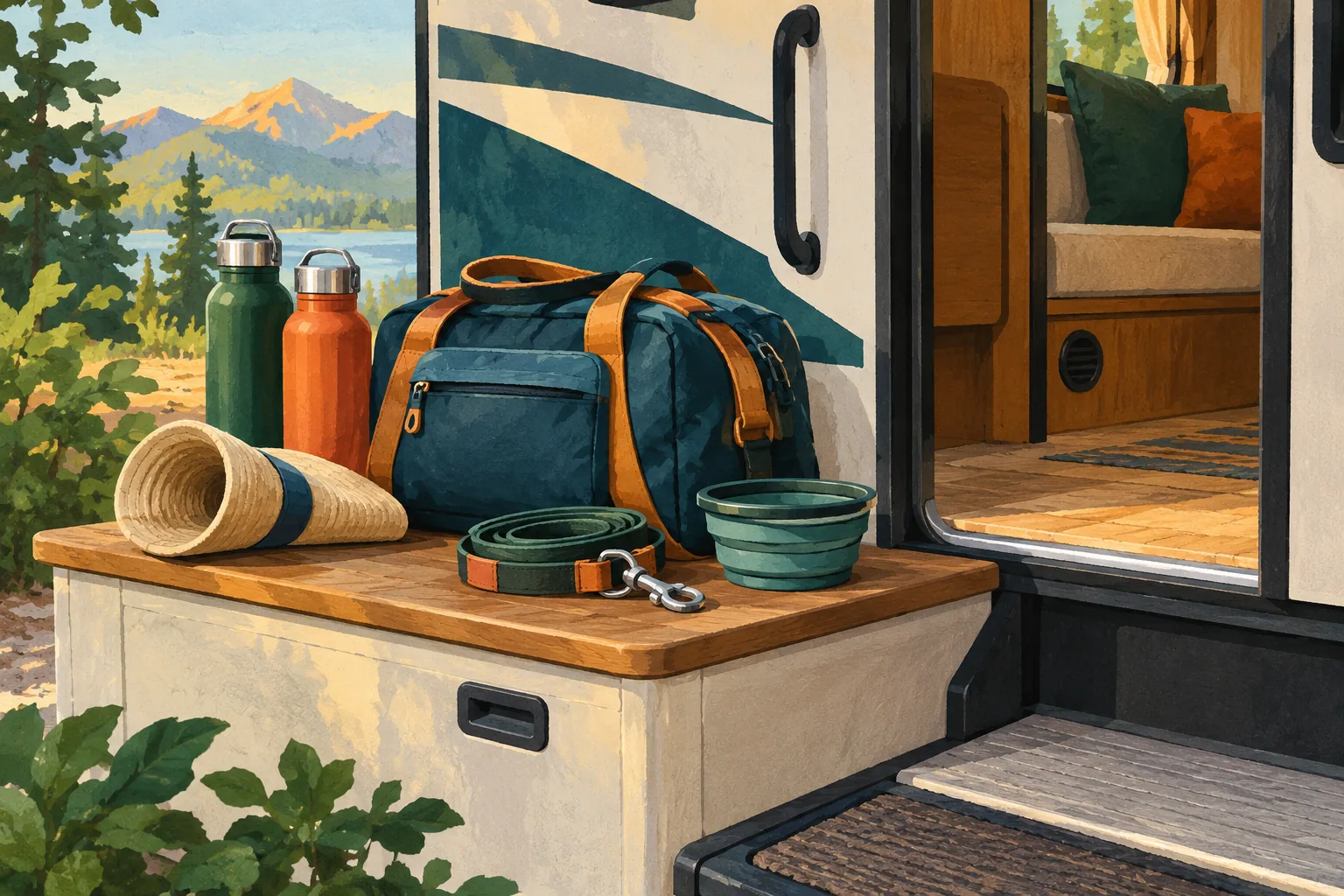
Include needed medications and care supplies, identification, payment, phone charging equipment, water, suitable snacks, and a change of clothes if an overnight stay is possible. Add the family's actual needs rather than a generic shopping list.
Store medications according to their labeling and pharmacist's instructions. If a medicine has temperature requirements, ask the pharmacist how to transport it and what to do after a suspected temperature excursion. Do not assume an ordinary lunch cooler makes every medication safe.
Pet items may include a leash, carrier, water bowl, food, and required records for the chosen care or lodging option. Keep these with the plan so nobody must search through storage while the family waits in worsening conditions.
Solve the pet problem explicitly
A cooling destination that excludes the pet is only part of the plan. Confirm a pet-accepting alternative or responsible care arrangement before relying on it. Do not leave an animal in a parked vehicle while the family goes inside.
The American Veterinary Medical Association's warm-weather advice warns that vehicles can become dangerous quickly and recommends discussing individual heat risks with a veterinarian. Ask your vet about your animal's needs and the signs requiring urgent care.
A remote temperature monitor may provide information, but it cannot move a pet, restore power, or guarantee that an alert reaches someone who can act. If you use one, identify the human response and the travel time. For this backup plan, assume equipment and connectivity can both fail.
Keep food decisions separate from people decisions
Do not delay relocation to save every item in the refrigerator. Close the door, record the outage time, and follow food-safety guidance when it is safe to do so. Use an appliance thermometer rather than judging food by touch, smell, or taste.
USDA's emergency food guidance provides item-specific information for power loss. Perishable foods that have been above 40°F for more than two hours generally need to be discarded; evaluate foods using the applicable guidance and known conditions. For perishables taken out of refrigeration, USDA shortens the limit to one hour when the air temperature is above 90°F. If time or temperature is unknown, do not invent a reassuring history.
A small shelf-stable meal supply reduces pressure to cook inside a hot RV or keep opening the refrigerator. Pick foods your family will actually eat and that fit allergies and other dietary needs. Rotate them during ordinary travel so the backup remains useful.
Decide what happens to the RV
Tell campground staff where you can be reached and ask about the outage or cooling problem. Use the RV manufacturer's instructions for any owner-level steps. Do not improvise air-conditioner repairs, bypass electrical protection, or add unapproved power arrangements.
If a technician is needed, ask whether you must be present, how access will work, and when to expect an update. A repair appointment and a safe place for the family can proceed as separate tracks. Do not promise the children you will return in an hour unless there is a sound basis for that promise.
Before returning to stay, confirm that the space and the relevant systems are actually suitable again. A service call being marked complete is useful information, but the family still needs a workable sleeping plan for the coming night.
Copy this hot-weather destination card
- Campground address and site number
- Primary cooling destination, confirmed hours, contact, and entry rules
- Backup destination and overnight option
- Transport, keys, route, and estimated relocation time
- Pet location and responsible adult
- Essential care supplies and their storage requirements
- Adult responsible for supervision and adult responsible for calls
- Triggers for leaving and emergency contact information
- Last time destination details were checked
Review the card at each new campground and whenever the forecast changes materially. Update the local addresses and arrangements so the family can move early while repairs are handled separately.
Researched practical guide · The RV Dummies · Editorial review: 2026-10-02.
Sources & further reading
Always follow your RV and tow-vehicle manuals. When in doubt, ask a pro.