

A campground may welcome pets while the attraction you want to visit does not. A trail may allow dogs while its shuttle, visitor building, or beach excludes them. Planning only the campsite leaves the most important part unanswered: where will the pet be, with whom, during every part of the day?
Build the outing around an actual care arrangement and a workable change of plan. That can mean a pet-inclusive activity, a responsible adult staying behind in suitable conditions, or a verified care provider. A remote temperature alert is useful information only when a person can respond; it is not a complete care plan.
Map the pet's whole day
Write a short timeline from departure to return. Include travel, parking, any transit, the activity, meal stops, and delays. Next to each stage, identify the pet's location and responsible person.
Look for gaps such as “waits in the car while we buy tickets” or “stays in the RV until we get back.” Those phrases hide questions about temperature, supervision, access, and what happens if the outing takes longer than expected. Resolve the gap before booking the activity.
Consider the animal's normal routine. A busy day with unfamiliar sounds, surfaces, and people may not be suitable even where pets are legally permitted. Ask the veterinarian about individual needs, especially for a pet with health or mobility concerns, and choose the outing accordingly.
Verify the exact destination rules
Read the official rules for the attraction and the specific area you plan to use. Check trails, buildings, transportation, outdoor dining, and any timed activity separately. Save the date and the relevant page, then contact staff when the instructions are unclear.
For example, Florida State Parks' pet policy, checked October 2, 2026, allows pets in many parks but excludes them from various areas and notes park-specific restrictions. A general “pet-friendly” label does not establish access to every part of a park. Verify the current rules for your chosen park before travel.
Do not assume a campground employee can approve a different attraction's policy. Likewise, a reservation platform's pet filter may describe lodging rather than the day's transportation or activities. Go to the organization responsible for each part of the outing.
Separate pet rules from service-animal access
If you are traveling with a service animal, consult the destination's current official service-animal guidance and raise access questions directly with the responsible organization. A generic pet itinerary should not be used to determine disability access rights.
For an ordinary pet, follow the relevant leash, containment, waste, and restricted-area rules. Pack what is needed to comply rather than assuming supplies will be available at the entrance. If the plan includes a carrier, confirm the carrier requirements with the actual transport or venue.
Record the answer in plain language. “Dogs allowed on the named trail; not in the visitor building” is more useful than “pets okay.” Include the alternative activity or adult arrangement for the restricted portion.
Build a heat plan before leaving camp
Check the forecast and the conditions along the outing, including exposed paths and waiting areas. Arrange suitable water, breaks, and timing for the pet. The American Veterinary Medical Association's warm-weather guidance warns against leaving animals in parked cars, even with shade or cracked windows, and recommends discussing heat risks with a veterinarian.
Do not use a universal temperature cutoff from a travel forum to decide that your animal is safe. Species, breed, age, health, activity, humidity, and other circumstances can matter. Ask the veterinarian what signs and circumstances should change your own pet's plan.
If the pet appears ill or may be suffering heat stress, seek urgent veterinary guidance rather than trying to finish the attraction. Have the destination and contact information for emergency veterinary care available before you need them.
Choose a responsible care arrangement
If the pet cannot come, decide who will provide care and where. For a professional provider, verify availability, hours, accepted animals, required records, drop-off and pickup rules, and emergency procedures. A nearby listing does not mean the provider can accept a new animal that morning.
If one adult stays with the pet, make that an explicit family decision. Confirm the RV will remain suitable and that the adult has transport or another way to relocate if power or cooling fails. “Staying behind” should not mean being stranded while the only vehicle is across the park.
A friend or sitter needs clear instructions and the authority to contact you and seek the agreed emergency help. Share only the information needed for the care arrangement. Give the person the campground's exact address and site number, not just the park name.
Treat monitoring equipment as an extra layer
If you use a temperature monitor or camera, understand how it is powered and how it sends alerts. Check that it is connected and that the relevant person receives a test notification. Follow the device instructions and do not assume a signal indicator confirms end-to-end delivery.
Then ask what happens if the campground loses power, cellular service disappears, a phone battery dies, or a notification arrives during an activity where phones are inaccessible. A plan depending on all of those systems working has several ways to fail.
Write down who can physically reach the pet and how. If nobody can respond promptly, change the care arrangement or the outing. Avoid using an expensive device as a reason to accept a supervision plan you would otherwise consider unsuitable.
Pack for the activity and the unplanned return
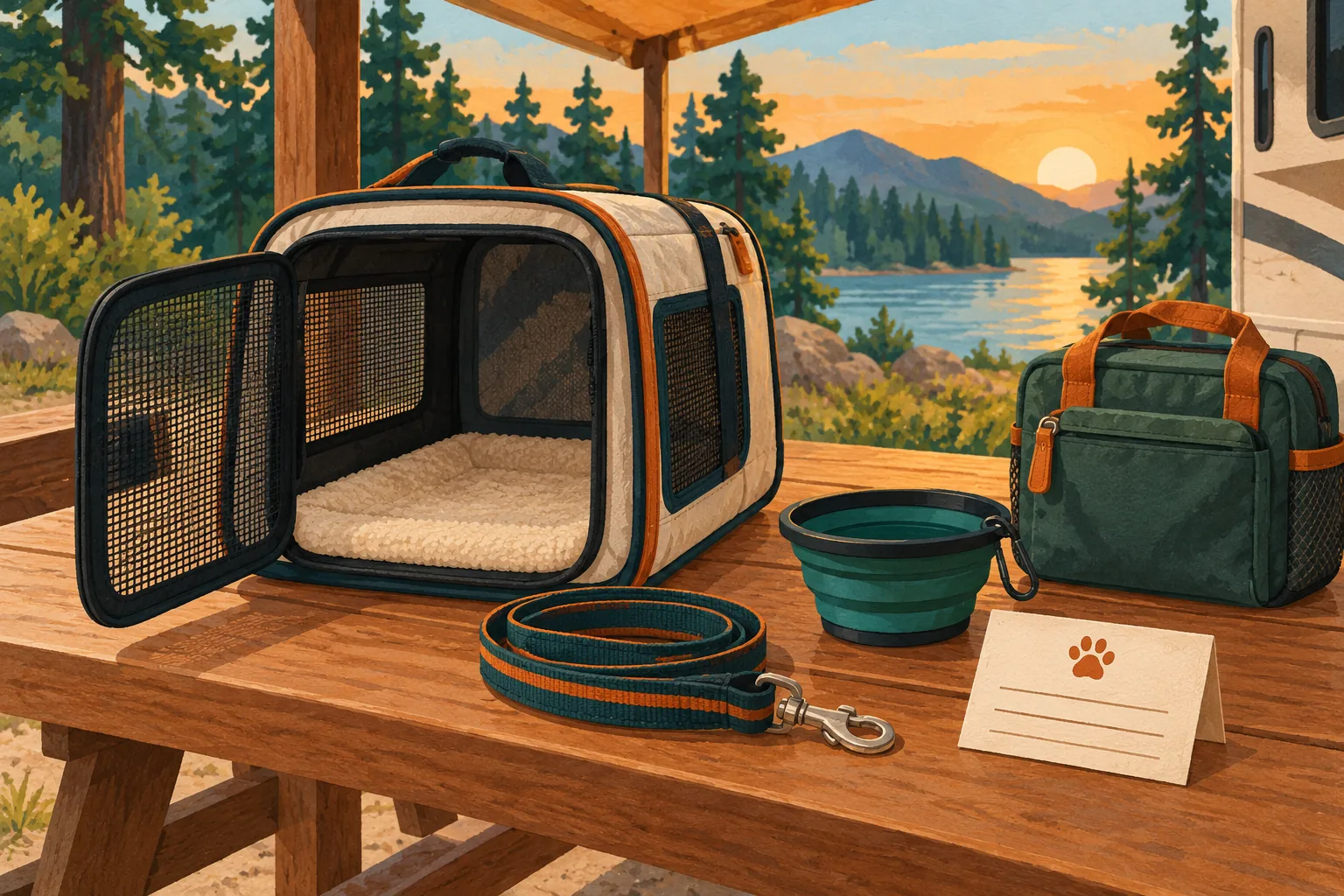
Bring the pet's normal travel essentials, appropriate restraint or carrier, identification, water and bowl, waste supplies, and any veterinarian-directed care items. Check medication storage and dosing instructions with the veterinarian or pharmacist; do not improvise them for the trip.
Carry a current photograph and save useful records privately. A care provider may require vaccination or other documentation, so verify exactly what is needed before sharing it. Keep a copy accessible even if campground internet is poor.
Pack the human side of the fallback too: vehicle keys, fuel or charge, phone power, route information, and a way to pay. Returning early is easier when it does not require retrieving a bag from a distant locker or finding a family member without reception.
Agree on the return trigger
Decide which changes end the outing: a care provider's concern, a cooling failure, a weather change, a missed check-in, or an access problem. The point is to avoid renegotiating the pet's needs after the family has invested time and money in the day.
For activities with poor reception, arrange the check-in method and timing in advance. Do not promise constant reachability where you have not verified it. If reliable contact is essential and unavailable, choose a different activity or care arrangement.
Tell children that returning early is part of responsible travel. Offer a small alternative that is compatible with the pet, rather than treating the changed plan as someone's fault. A short enjoyable outing is better than stretching an unsuitable one to match the original itinerary.
Copy this pet outing and care card
- Pet's location and responsible adult for each part of the day
- Destination and exact areas where access is confirmed
- Rules checked, source, date, and unresolved questions
- Care provider contact, hours, required records, and pickup deadline
- Campground address, site, access instructions, and backup transport
- Water, food, medication, carrier, and other individual needs
- Primary veterinarian and verified local emergency-care contact
- Monitoring equipment limitations and human response arrangement
- Return triggers, communication plan, and alternative activity
After the outing, note rules you nearly missed, longer-than-expected walks or care arrangements that needed earlier booking. Use those details next time, and recheck the rules before relying on them.
Researched practical guide · The RV Dummies · Editorial review: 2026-10-02.
Sources & further reading
Always follow your RV and tow-vehicle manuals. When in doubt, ask a pro.